
Part 2 of 5 in our International Compost Awareness Series
Welcome back, friends. Yesterday we covered the basics of what compost actually is and the greens-to-browns balance you need to keep in mind. (If you missed it, start there — today’s post will make a lot more sense if you’ve got the foundation.)
Today we’re getting practical. Because here’s the thing I really want you to hear: there is a composting setup for YOUR life. Whether you’re in a studio apartment with no balcony, a two-flat with a tiny backyard, or running an urban farm in the city, there’s a way to make this work. Let me walk you through it.
Level 1: You have ZERO Outdoor Space
If you live in an apartment, condo, or anywhere without access to a patch of dirt, you have more options than you think. This list is for our Chicagoland/Illinois community members. If you are outside of this area – you can CHECK HERE to start the search for places in your city or state
Chicago’s Food Scrap Drop-Off Program is hands-down the easiest entry point for any Chicago resident, period. The City currently operates 33 free drop-off sites — many at public libraries — open daily from 7 a.m. to 7 p.m. You sign up online (it’s free), grab a container with a lid, and start saving your scraps. They accept a wide range of food waste, including meat, bones, and dairy, which most home systems can’t handle. A heads up though: no bags allowed in the green carts, not even the compostable kind. The City wants clean compost coming out of the Harbor View Composting Facility, so we keep the contamination low.
Private compost haulers are another fantastic option, especially if dropping off isn’t going to fit your life. In Chicago, services like Block Bins, Collective Resource, Urban Canopy / Healthy Soil, and WasteNot all offer either neighborhood community bins or door-to-door 5-gallon bucket service. Most start around $10 a month. They take meat and bones, they swap your bucket for a clean one, and some of them will even bring you finished compost back for your container garden. That’s the dream.
Quick note on the new ordinance: As of October 2025, Chicago passed an organic-waste and composting ordinance (SO2025-0018160) that prohibits property managers and building owners from blanket-banning tenants from composting, dropping off scraps, or using a private hauler — as long as the system is fully enclosed and pest-controlled. So if your landlord has been giving you a hard time, the law is on your side now. (Always be respectful and follow your building’s reasonable rules around container placement and odor control. We don’t need any neighbor wars over banana peels.) Please make sure to check the ordinances in your city and state.
Level 2: You Want to Compost Indoors
If you’d rather keep it all in-house, you have three solid options.
Vermicomposting (worm bins) is my personal favorite for indoor composters. You set up a bin with shredded cardboard or newspaper bedding, add a pound of red wigglers (Eisenia fetida — accept no substitutes), and let those little workers eat your scraps. They produce worm castings, which are arguably the most nutrient-dense soil amendment on the planet. Red wigglers are happiest between 55°F and 77°F, so a basement, kitchen cabinet, or closet works beautifully. They don’t smell if you’re feeding them right. They don’t escape if you’re keeping the bedding moist and if you make sure to have your lighting done properly. Otherwise, you may wake up to a scene like Natasha did a couple of years ago. You will get VERY acquainted with worms that way. And kids LOVE them – mostly.

Bokashi is fermentation-based composting and the best option if you want to compost meat, dairy, and cooked foods indoors. You add scraps to an airtight bucket along with an inoculated bran (you can buy this at most garden supply stores), press it down, and let it ferment for about two weeks. The end product isn’t finished compost — it’s “pre-compost” that you’ll need to bury in soil or add to a traditional pile to fully break down. But for apartment dwellers who want to handle ALL their food waste themselves? Bokashi is the move. One of our favorite Bokashi composters to follow is Crystal Walker also known as the Compost Fairyy. If you think Natasha is straightforward, she has NOTHING on Crystal. However, they both are going to tell you the truth with no judgment.
Electric countertop composters have come a long way and they look adorable on a counter. Be honest with yourself though: most of these machines don’t actually produce true compost. They dehydrate and grind your scraps into a soil-like material that still needs to break down further before it’s ready for plants. They’re a great waste-reduction tool, but if you want real, finished compost, you’ll need to pair the output with a worm bin, a community drop-off, or a backyard pile. So think of this as a first step instead of a complete system.
Level 3: You Have a Patio, Balcony, or Tiny Outdoor Space
This is the sweet spot where a lot of urban gardeners are operating, and you have great options
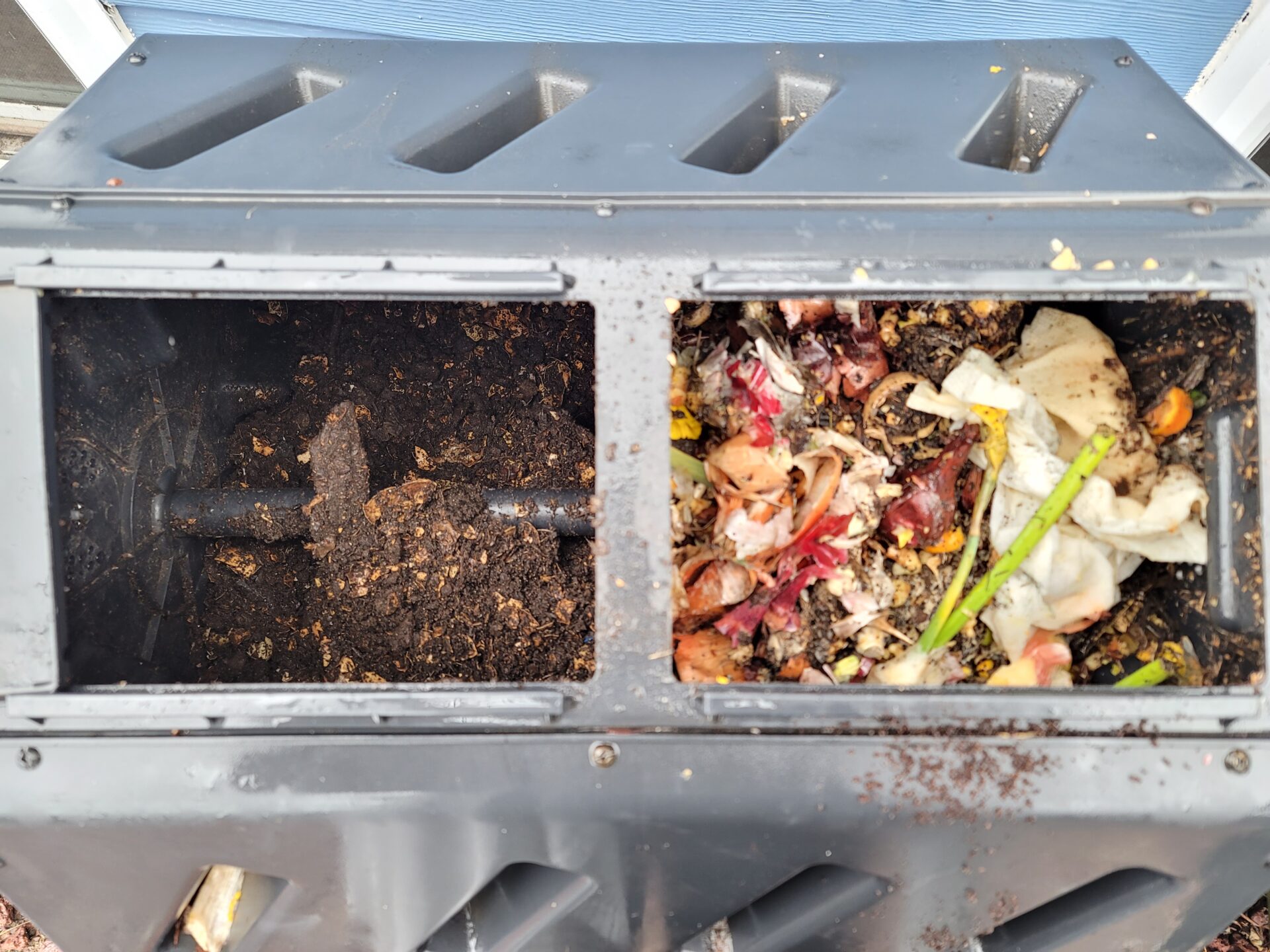
A small tumbler composter sits beautifully on a patio or balcony. The barrel-on-a-stand design lets you flip it with a handle to aerate the pile — no shovel work required. Most run about 30 to 80 gallons, which is plenty for a one-to-three-person household. They’re enclosed, so they keep critters out, and they heat up fast in the sun, which speeds the whole process up.


An outdoor worm bin can also live on a balcony or porch in the warmer months. Just remember those red wigglers we talked about — they need to come inside before the temperature gets close to freezing, or your worm population is not going to make it through a Chicago winter. (More on winterizing later in the week.)

A note for our Chicago growers who live in buildings: per the new Chicago ordinance, your container needs to be fully enclosed with no openings larger than ¼ inch — that’s the rodent code, and we take it seriously around here. We do NOT want to be the reason rats become a neighborhood conversation. Rats also eat the food you grow in your garden. We’re all for sharing with the outdoor animals, but not INVITING them to move in.
Level 4: You Have a Yard
Now we’re talking. If you have a yard — even a small one — you can run a larger, traditional, gloriously productive compost system.
The free Chicago compost bin program: The Department of Streets and Sanitation has been offering free 80-gallon backyard compost bins to eligible residents while supplies last (20 per ward, single-family or up to 4-unit buildings). Applications usually open up in the spring. Sign up. They deliver it to your door. Use the City’s resources, friends, your property taxes and other things help fund these types of programs.
The DIY option: If you want to build your own, a three-bin pallet system is the gold standard. One bin is the active pile you’re feeding, one is “cooking,” and one is finished compost ready to use. Pallets are often free if you ask around at local businesses. You want each bin to be at least 3 feet by 3 feet by 3 feet — that’s the minimum size for a pile to retain enough heat to really get cooking. Here’s a 3 bin system that we saw at the St. Louis Science Museum while traveling Route 66.

Level 5: You’re Ready for the Big Leagues
If you’re running a community garden, a school garden, or a small urban farm, you’re going to want to graduate to a multi-bay hot composting system, or look into hot-composting techniques like the Berkeley Method (an 18-day rapid compost system that requires turning every other day, but produces finished compost shockingly fast). At this scale, things like compost thermometers and a solid green/brown stockpile system stop being optional and start being how you keep the whole operation flowing. We can have a whole separate conversation about that one — and we will. We’ve started our own compost pile on the farm to see how this works. It’s been longer than 18 days, BUT we also haven’t applied all of the rules the way we should. Small steps, remember?
Pick One. Just One.
Don’t try to do all five of these at once. We see this all the time – we have been known to be guilty of doing this – folks get excited, sign up for the drop-off program, order a worm bin, build a backyard pile, and start a bokashi bucket all in the same week. Two weeks later, they’re overwhelmed and quitting altogether. LEARN FROM US!
Pick the level that matches your space. Pick ONE method within that level. Get good at that one before you add anything else. That’s the whole formula.
Coming up Wednesday — Part 3: Six Compost Recipes That Actually Work. Now that you know WHERE you’re composting, it’s time to get into the HOW. We’ve got six recipes ranked from “set it and forget it” to “all hands on deck,” and one of them is going to be just right for you.
Got compost questions? Come hang out with us in the We Sow We Grow Gardening Chat on Facebook, or drop your question in the comments below. We’re learning together, every season.
