
Part 4 of 5 in our International Compost Awareness Week series
OK, I need to clear something up that I hear ALL the time: composting does NOT stop when it gets cold. It slows down. It looks different. But it does not stop, and you do not get to stop either. Yesterday, we covered 6 compost recipes, now we move to make sure you are composting ALL YEAR.
TL:DR
Yes, you can compost through winter. Outdoor piles slow dramatically or freeze entirely in cold climates like Chicago, but they don’t die — they pause. Indoor systems like worm bins and bokashi keep producing year-round, and city drop-off programs operate 365 days a year. The key is keeping food scraps moving, even if the outdoor pile is dormant.

I know how it goes. The first frost hits, you walk out to the bin once, see the whole thing frozen solid, and you decide you’ll start again “in the spring.” Then spring comes and you’re trying to rebuild a habit from scratch instead of just continuing one. Friend, please don’t do that to yourself.
Composting is a year-round practice. Here’s how the year actually flows, especially for those of us dealing with real Chicago weather.
Spring Composting (March – May)
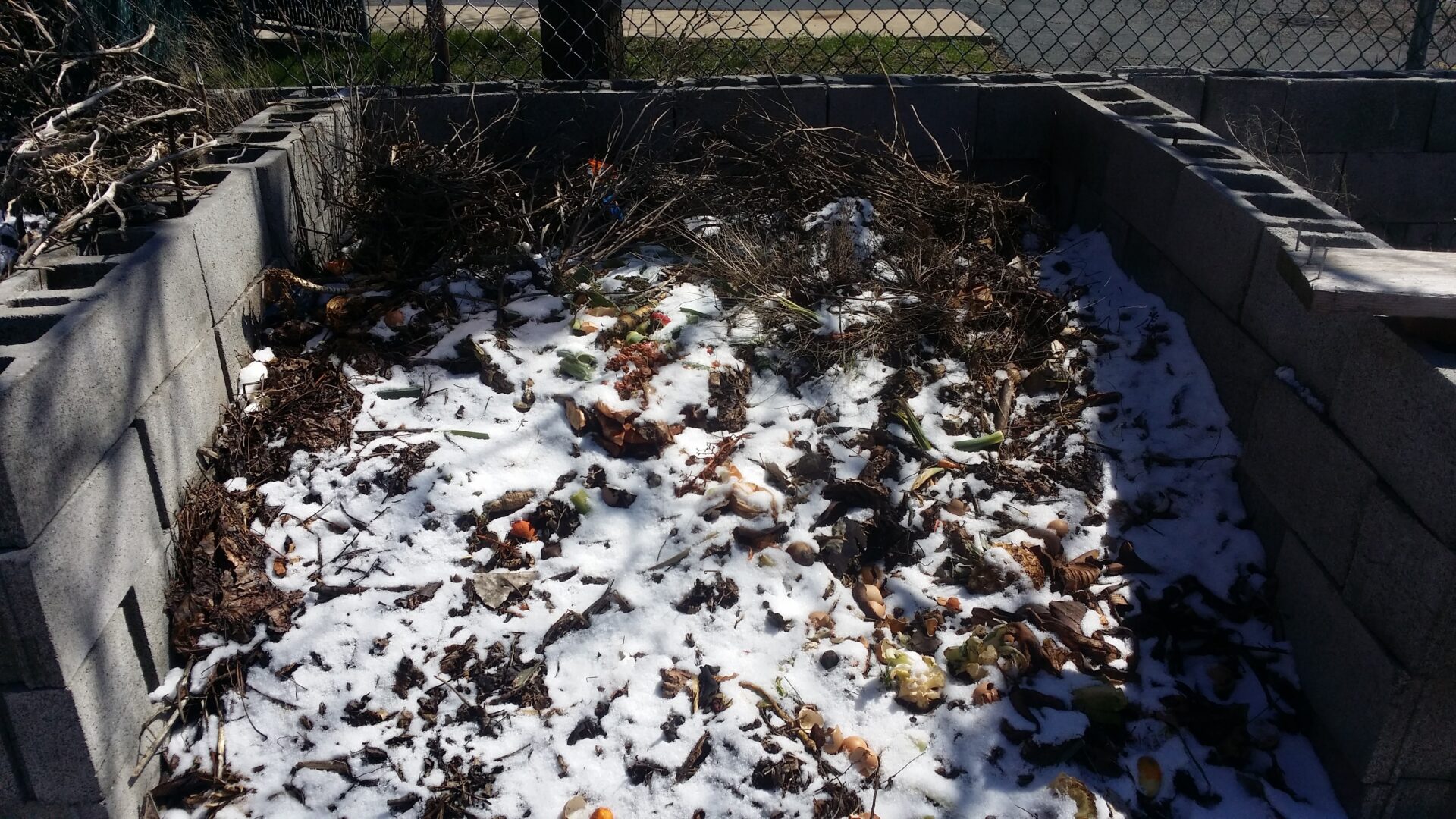
Your pile is waking up. If it froze solid over winter (mine usually does), give it a good turn once temperatures are consistently above freezing to reintroduce oxygen and break up the compacted layers. This is also when last fall’s leaves you saved (you DID save them, right?) get mixed into the mountain of fresh kitchen scraps that built up over winter.
Spring is the season of balance — adjust your green-to-brown ratio, add water if needed, and watch the steam start rising again. That steam is the microbes telling you they’re back to work. There is honestly no greater satisfaction in early-season gardening than walking out on a chilly April morning and seeing your compost pile literally smoking. That’s the system saying “we’re cooking again.”
Summer Composting (June – August)
Peak production season. Your pile is hot, fast, and hungry.
- Turn it weekly to keep oxygen flowing
- Check moisture often, especially during dry spells (our summers can swing from monsoon to desert in the same week)
- If you’re seeing flies or smelling anything funky, you’ve got too many greens — bury fresh kitchen scraps under a layer of browns each time you add to the pile, and the issue resolves itself
Summer is also when your compost becomes part of the garden flow. You’re harvesting from your beds, you’re pulling spent plants, you’re trimming back overgrown stuff — and almost all of that goes right into the pile. The garden is feeding the compost that is feeding the garden. That’s the whole loop, doing its loop thing.
Fall Composting: Why You Need to Hoard Leaves (September – November)
Fall is the most important composting season of the year, and I’m going to need you to take notes.
HOARD YOUR LEAVES. I am not joking. When your neighbors are bagging up their fall leaves to throw out, ASK if you can have them. Drag those bags home like you’ve found treasure (because you have). Shred them with a lawn mower if you can — it speeds breakdown by a huge margin. Stockpile them somewhere dry — a corner of the yard with a tarp, an extra bin, garbage cans with the lids on.
Those leaves are your brown supply for the entire next year. Without them, you’re going to find yourself in February staring at a slimy pile of kitchen scraps with nothing to balance it out, and you will be sad. Don’t be sad. Hoard the leaves.
Fall is also the season to do one big turn of your finished compost, harvest it, and apply it to your garden beds before they go dormant. Top-dress your beds, mulch around perennials, prep next year’s growing spaces. The compost you harvest in October is going to be FEEDING you next August.
Winter Composting – Yep, Even in Chicago (December – February)
Yes, you can compost through a Chicago (or any cold season) winter. Here’s how:
Your outdoor pile won’t break down much. That’s fine. It’s basically in cold storage. Keep adding to it — your scraps will freeze, which is honestly nature’s pause button. When spring comes, everything thaws out and the microbes get back to work like they never left.
The freezer is your best friend. A gallon-size freezer container (or just a dedicated drawer) lets you collect scraps without smell, fruit flies, or any of the things people think they hate about composting. When you’re ready, you walk the frozen scraps out to your bin or your drop-off site. Freezing actually breaks down cell walls in produce, which speeds up decomposition once it thaws. So your “winter laziness” is actually doing you a favor.
Indoor systems become essential. This is when your worm bin earns its keep. Bring it inside if it’s been on the porch — red wigglers WILL die at freezing temperatures. Bokashi keeps fermenting indoors regardless of what’s happening outside. Both let you keep diverting food waste while the outdoor pile is on ice.
Drop-off programs run year-round. Chicago’s Food Scrap Drop-Off sites are open every single day from 7 a.m. to 7 p.m., 365 days a year. There is no winter excuse here, friends. Bundle up.
The Big Takeaway
Composting in Chicago, or any cold climate, means working WITH the seasons, not against them. The pile is going to do different things in February than it does in July, and that’s fine. Your job isn’t to keep it cooking at the same speed all year — your job is to keep feeding the system so that when the weather IS cooperating, the system is ready to work.
Coming up Friday — Part 5: How to Actually Build the Routine. This is the post that ties the whole week together. Because all the recipes and seasonal knowledge in the world don’t matter if the scraps never make it from your kitchen to the bin. Tomorrow we’re talking logistics, habits, and how to make composting something you actually DO instead of something you talk about doing.
Got compost questions? Come hang out with us in the We Sow We Grow Gardening Chat on Facebook, or drop your question in the comments below. We’re learning together, every season.
