
Part 5 of 5 in our International Compost Awareness Week series
You made it, friends. Final post of the series. And I saved this one for last on purpose, because this is the part that determines whether everything else we’ve talked about this week actually happens or just stays as a nice idea in your head.
I’m going to be real with you: the hardest part of urban composting is not the science. It’s not the recipes. It’s not the seasonal flow. The hardest part is the logistics of getting scraps out of your kitchen and into a bin that may be three flights of stairs and a parkway away.
Most people quit composting within a month, and it’s almost never because the compost failed. It’s because the routine never got built. So today we’re building it.
TL;DR To start a composting routine that sticks: pick one dedicated kitchen container, put it in a visible spot, stack the habit onto an existing daily routine (like trash day or the dog walk), pick a weekly empty-out day, and start with produce scraps only for the first month. Most people quit composting because the routine never got built — not because the compost failed
Step 1: Pick Your Kitchen Vessel

You need ONE dedicated container in your kitchen that scraps go into and nothing else goes into. It can be:
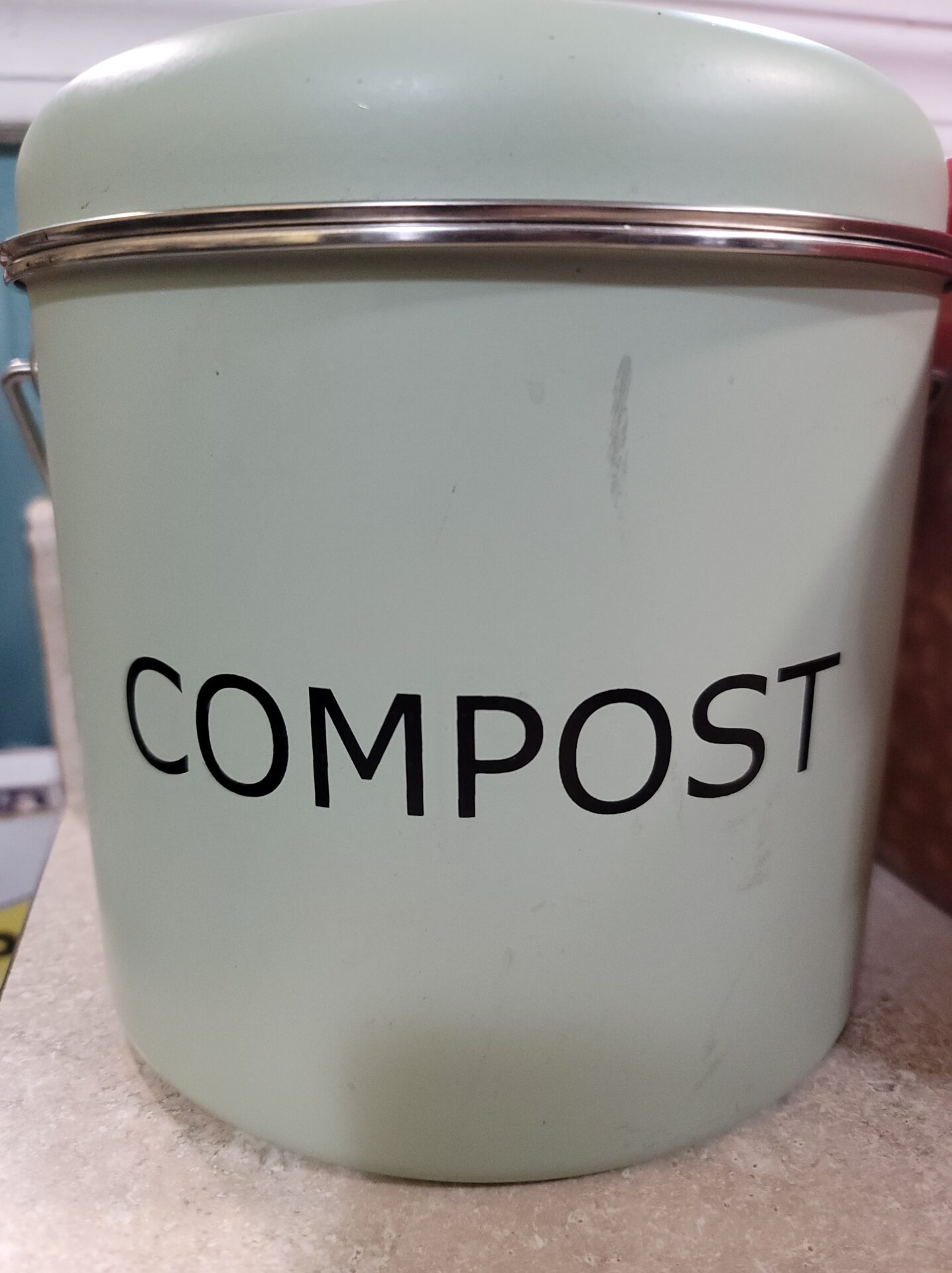
- A countertop bin with a charcoal filter (looks cute, controls smell, perfect if you cook a lot)
- A gallon container in the freezer (zero smell, zero fruit flies, my personal favorite for apartment dwellers)
- A repurposed yogurt tub or coffee container under the sink (it’s free, who cares)
Whatever you choose, it should be in the SAME spot every single time. Routines are built on muscle memory.
Step 2: Stack the Habit
Don’t try to invent a new trip just for compost. Stack it onto something you already do.
- Going to the library? Drop off scraps on the way (most City sites are AT libraries — this is by design).
- Walking the dog? The bin is on the back porch on the way out.
- Taking the trash out? The compost bucket goes with it.
- Grocery shopping? Empty the freezer compost on your way to the car.
If you have to drive specifically to drop off compost, you’re going to skip it. If it’s already on your path, you won’t.
Step 3: Pick Your Day
Decide on a “compost day” — the day each week where everything gets emptied, regardless. Sundays are great for a lot of folks because it resets the kitchen for the week ahead. Pick a day, put it in your phone calendar with a recurring reminder, and treat it like trash day. It IS trash day. Just for the good kind of trash. Because let me tell you if you don’t you may end up with a soupy mess to clean up later.
Step 4: Make It Visible

Out of sight, out of mind is real. If your countertop bin is hidden behind the toaster, you’ll forget. Put it where you actually see it. Same with whatever you use to remind yourself of drop-off day — a sticky note on the fridge, a phone reminder, whatever works.
Step 5: Don’t Be a Hero on Week One
Start with just produce scraps. That’s it. Don’t try to do bokashi, vermicomposting, AND a backyard pile in your first month. Build ONE habit until it sticks, then expand. Most people who burn out on composting tried to do everything at once.
A Final Word From Me to You
We’ve covered a lot this week. Five posts, dozens of methods and resources, six recipes, four seasons, every scenario from studio apartment to backyard farm. If it feels like a lot, that’s because it IS a lot. But here’s what I need you to hear:
You do not have to be perfect at this. You don’t have to start with the deluxe three-bin pallet system or memorize a carbon-to-nitrogen ratio chart. You don’t have to be a Master Gardener — I sure wasn’t when I started, and even now, after a Master Urban Farmer certification through the U of I Extension, I am STILL learning something new every single season.
What you do have to do is start. Save your coffee grounds tomorrow morning. Stick a container in your freezer. Sign up for the City Drop-Off Program tonight. Pick your first thing and do that one thing.
Because here’s what nobody tells you about composting: once you start, you’ll never look at your kitchen the same way again. Things you used to throw out without thinking — the broccoli stems, the apple cores, the carrot tops — start looking like inputs. You start mentally calculating how much black gold you’re about to have come spring. You start asking your neighbors for their leaves. You become, in the best way, a little weird about it.
And that’s the whole point. Gardening isn’t a solo sport, and composting is the part that proves it — your scraps become soil, your soil grows food, your food feeds your neighbors, and your neighbors give you their leaves so you can do it all over again next year. It’s a whole loop. We’re all in it together.
Now go get dirty by nature!
That’s a wrap on this series for International Compost Awareness Week. Thank you for spending five days with me on this. If this series helped you, the best thing you can do is share it with somebody else who’s been on the fence about starting — somebody who lives in an apartment and thinks they can’t, somebody who tried before and gave up, somebody who keeps saying “next year.” Send them Monday’s post and tell them to start at the beginning.
Catch up on the series:
- Part 1: Compost Is For Everybody (Yes, Even You) — Compost 101
- Part 2: Composting at Every Level — From Apartment to Urban Farm
- Part 3: Six Compost Recipes That Actually Work
- Part 4: Year-Round Composting in a Real Climate
- Part 5: How to Actually Build the Composting Routine (you’re here)
Got compost questions? Come hang out with us in the We Sow We Grow Gardening Chat on Facebook, or drop your question in the comments below. We’re learning together, every season.
